
How To Make The Best Fried Turkey In Columbus

Columbus, : I’ve been frying turkeys for over 20+ years. I’m going to show you how to fry a delicious turkey without burning your damn house down.
- Always fry outside on flat concrete, at least 10 feet from everything.
- Make sure your bird is COMPLETELY thawed.
- Pat the bird bone dry. Water is your enemy.
- Use the proper amount of oil.
- Don’t overheat the oil.
- Turn off the burner when you drop the bird
- Never leave the bird alone – EVER
- Have a fire extinguisher on hand
What You Need to Buy
The Turkey: Get a 12-14 pound bird. That’s the sweet spot. Don’t get some massive 20-pounder because you think bigger is better. Bigger birds don’t cook evenly and they’ll make your oil overflow. If you need to feed a crowd, fry two smaller birds instead.
The Oil (3-4 gallons):
- Peanut oil – This is what I use. Best flavor, handles the heat perfectly.
- Canola oil – Cheaper option if you’re on a budget or someone’s allergic to peanuts.
- High-oleic safflower or sunflower – Premium choice, no allergens, works great.
The Fryer Setup: You need a propane fryer for outdoor use. Electric fryers are safer for idiots, but they don’t get hot enough and your turkey won’t be as crispy.
- Budget: GasOne 30-quart or CreoleFeast 30-quart kits. These come with everything you need.
- Mid-range: Bayou Classic 32-quart stainless steel full kit. This is what I have. Durable as hell.
- Big spender: Bayou Classic stainless steel full kit 44-quart “Big Bird”. Only get this if you absolutely need it. Otherwise, stick with two smaller turkeys.
Safety Gear (Don’t Skip This):
- Metal sheet pan with a rack
- Long heat-resistant gloves
- Safety goggles
- Clip on deep fry thermometer
- Instant read meat thermometer
- Sturdy hook or rack for lowering the bird
- Wind-resistant lighter
The Process – Step by Step
Step 1: Thaw Your Turkey (3-5 Days Before)
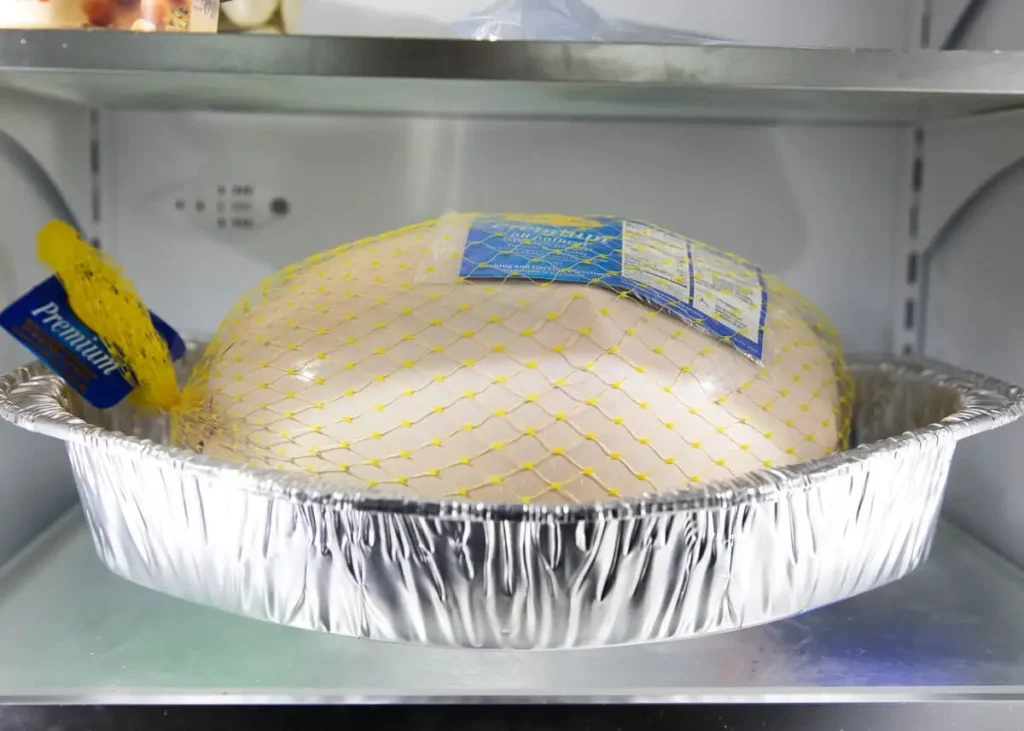
This takes longer than you think. Plan on 24 hours of thawing time in the fridge for every 4-5 pounds. So a 12-pound turkey needs about 3 days in the fridge.
Here’s the critical part: Before you do anything else, check the cavity and joints for ice. Stick your hand in there. If there’s ANY ice, it’s not ready. Ice = water. Water + hot oil = explosion. I’m not being dramatic.
A fully thawed turkey can sit in your fridge for 1-2 days, so do this early.
After your turkey is thawed in the fridge (still in its plastic wrapping), you can go ahead and figure out how much oil you’ll need for the fryer.
Here’s how:
- Grab your thawing turkey (still wrapped in plastic – don’t unwrap it yet)
- Put it in your empty fryer pot
- Fill the pot with cold water until the turkey is just covered
- Make sure you have at least 4-6 inches of space from the water line to the top of the pot
- Mark that water line with a piece of tape on the inside of the pot
- Pull the turkey out and put it back in the fridge
- Dump the water and dry the pot completely
That marked line is your maximum oil fill level. For most 30-32 quart pots with a 12-14 pound bird, this usually works out to about 3-4 gallons of oil.
Doing this now saves you time on fry day, and you’ll know exactly how much oil to buy.
Step 2: Dry Brine (1-2 Days Before)

This is how you get juicy meat and crispy skin. Forget wet brines for frying. They add water, which is the enemy.
How much salt: 1 teaspoon of Diamond Crystal kosher salt per pound. If you’re using Morton’s, use ¾ teaspoon per pound.
What to do:
- Work the salt under the skin on the breasts and legs. Just slide your hand between the skin and meat.
- Sprinkle a little in the cavity.
- Put the turkey on a rack over a sheet pan.
- Stick it in the fridge UNCOV74ERED for 24-48 hours.
Feel free to add any other dry herbs you see fit. If you already did a wet brine (God help you), you MUST rinse it off, pat it completely dry, and let it air-dry for hours. Preferably overnight.
Step 3: Optional Injection (1 Day Before or Day Of)
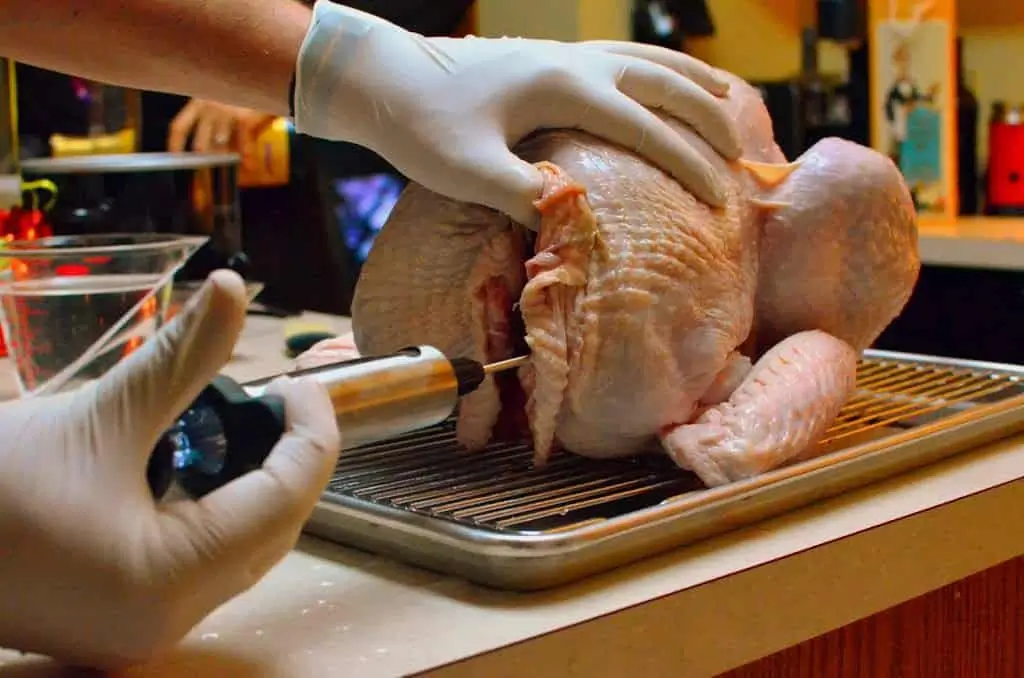
This is optional, but it adds flavor. Use a butter-based injection . You can make it an herb butter mixed with a little broth if you want. Strain out any chunks or they’ll clog your injector.
How to inject:
- Hit several spots in each breast, thigh, and drumstick
- Push the needle in, then slowly press the plunger as you pull it back out
- Pat the surface dry afterward
You can do this 12-24 hours before frying, or 30-60 minutes before. Both work.
Step 4: Season The Bird

- Pat the turkey completely dry after the dry brine
- No need to add a binder. Binders and moisture and moisture is the enemy
- Apply black pepper and Bald Buck Seasoning directly to the dry skin 30-60 minutes before frying
- Press the seasonings gently into the skin so they adhere
Step 5: Set Up Your Frying Station (Fry Day)

Location is everything. Get this wrong and you’re going to have a bad day.
- Outdoors only – I don’t care how cold it is
- Flat, non-combustible surface (concrete driveway, not your wooden deck)
- At least 10 feet away from your house, garage, trees, or anything that can catch fire
- Keep the propane tank offset from the burner
- NO OVERHANGS – not under your patio cover, not in your garage with the door open
- Don’t fry in rain or snow
- Never leave it unattended
- Keep kids and pets away
Put on your gloves and goggles. The lid stays OFF during frying.
Step 6: Heat the Oil
Pour oil to your marked line. Clip your thermometer to the side of the pot. Remove tape if used to mark the line.
Here’s the deal: You want the oil to settle at 325-350°F once the turkey goes in. The turkey will drop the temp, so I heat mine to about 375°F first. When the bird goes in, it’ll drop right into that 325-350°F sweet spot.
Step 7: Lower the Turkey (This is Critical – Don’t Screw This Up)
TURN THE BURNER OFF.
I don’t care that the flame is pretty or that you’re in a hurry. Turn it off.
Now, with your gloves and goggles on:
- Hook your turkey securely
- Lower it SLOWLY – take 60-120 seconds
- Watch the foam/bubbles rise as it goes in
- If the foam gets close to the rim, PAUSE and raise the turkey slightly until it settles
- Once the turkey is fully submerged, turn the burner back on
This is how people burn down their houses. They don’t turn off the burner, they drop the turkey in like they’re slam-dunking a basketball, oil overflows onto the flame, and boom – they’re on YouTube.
Step 8: Fry and Monitor
Plan on about 3-4 minutes per pound. That’s your ballpark. A 12-pound turkey = roughly 36-48 minutes.
Keep the oil between 325-350°F by adjusting your flame. If it drops too low, the turkey will absorb oil and be greasy. If it gets too high, the outside burns before the inside cooks.
Step 9: Check for Doneness
Time doesn’t decide when your turkey is done. Temperature does.
You’ve got two options here, and both are legit:
Option 1: The Conservative Approach
- Pull the turkey when the breast hits 165°F (thigh will be around 175°F)
- Lift it out, let it drain for a minute
- Rest for 15-20 minutes uncovered
Option 2: The Juicier White Meat Approach (this is what I do)
- Pull the turkey when the breast hits 160°F
- The internal temp will rise to about 170°F as it rests (this is called carryover cooking)
- Rest for 20-30 minutes uncovered
- Double-check with your instant-read thermometer before carving
Both are safe. Option 2 gives you juicier breast meat.
Step 10: Rest and Carve

Set the turkey on a rack over a sheet pan. Do NOT cover it with foil. That traps steam and makes your crispy skin soggy. Let it rest for 15-30 minutes depending on which method you used.
Carving tip: Remove whole sections first (legs, thighs, breasts), then slice them. This keeps the crispy skin intact instead of shredding it.
Quick Safety Reminders (Don’t Be an Idiot)
- Dry turkey = safe. Wet turkey = dangerous.
- Turn off the burner before lowering the bird.
- Lower it SLOWLY. This isn’t a game of Operation.
- Keep a fire extinguisher nearby (rated for grease fires).
- If something goes wrong, step back. Don’t try to be a hero.
Final Thoughts
Frying a turkey isn’t hard, but it requires respect. You’re dealing with gallons of oil hot enough to cook a bird in an hour. That same oil can send you to the hospital if you’re careless.
Follow these steps, don’t take shortcuts, and you’ll have the best turkey your family has ever eaten.
And for God’s sake, don’t try to fry a frozen turkey because you saw it on YouTube. I’ve seen the videos. It’s not worth it.
Good luck, stay safe, and enjoy your Thanksgiving.
Pro Tips
Good Butter: I use Dragon Salted Welsh Butter. This premium Welsh butter delivers a rich, complex flavor that elevates your compound butter or injection marinade. Not convinced it’s worth the premium? Make a grilled cheese with it first. You’ll understand why it belongs on your Thanksgiving turkey
Compound Butter Brush: After removing from oil, lightly brush with melted compound butter (3 parts butter, 1 part minced garlic, pinch of salt). The key word is lightly, just enough for flavor without making the crispy skin soggy. That skin is your masterpiece, don’t drown it.
Seasoning: I recommended using Bald Buck Seasoning as your salt. Choose the Bold Taste flavor. It adds a delicious and unique flavor people can’t quite put their finger on. There are plenty of YouTube videos on this stuff but below is the best one.